
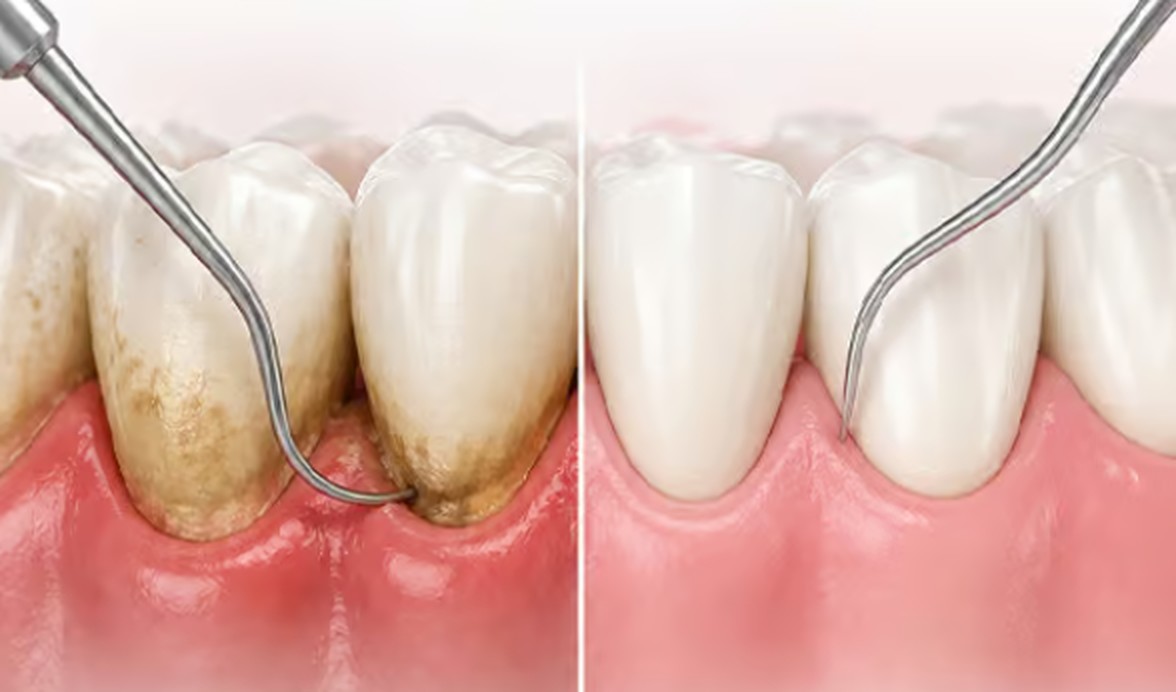
Gums that bleed when you brush or floss are not normal, even if they do not hurt. In most cases bleeding is the first sign of gum inflammation (gingivitis), and the good news is that at this stage it can be fully reversed.
The most common causes
- Plaque and tartar along the gum line, the cause in the large majority of cases.
- Brushing too hard or with a hard toothbrush.
- Hormonal changes, for example during pregnancy.
- Smoking, which can also hide the bleeding while the gums get worse.
- Some medicines, such as blood thinners, and general conditions such as diabetes.
What you can do at home
- Keep brushing, gently, twice a day with a soft toothbrush. Stopping because of the bleeding makes the inflammation worse.
- Clean between your teeth every day with floss or interdental brushes.
- Use an antibacterial mouthwash for a short period if your dentist recommends it.
- With good daily cleaning, mild bleeding usually improves within one to two weeks.
When to see the dentist
Book a visit if the bleeding lasts more than two weeks, if your gums are swollen or red, if you notice bad breath that does not go away, or if your teeth feel loose. These can be signs of periodontitis, an advanced form of gum disease that needs professional treatment.
How we treat it
At the clinic we start with a check-up and a professional cleaning: we remove tartar above and below the gum line and polish the teeth. If the gums are more seriously affected, we plan a deeper periodontal treatment and regular follow-ups.
Gums and general health
Gum health isn’t only about the mouth. Gum disease is more common and harder to control in people with diabetes, and long-term gum inflammation is linked to other health problems. Smoking also hides bleeding, so smokers can have gum disease without noticing.
Pregnancy and gums
During pregnancy, hormonal changes make the gums more sensitive and more likely to bleed. Good oral hygiene and a dental check-up are safe and recommended during pregnancy too.
What is a deep cleaning?
When tartar is below the gum line, a regular cleaning is not enough. Root planing cleans the roots in depth, usually under local anaesthetic. After a few weeks the gums are less swollen and bleed much less.

Frequently asked questions
Should I stop flossing if my gums bleed? No. Keep going gently: bleeding usually decreases within 1–2 weeks. If it doesn’t improve, book a check-up.
Prevention
A professional cleaning every 6 months and good daily habits are the best protection. Read more about hygiene and prevention at Roma Dental Clinic.